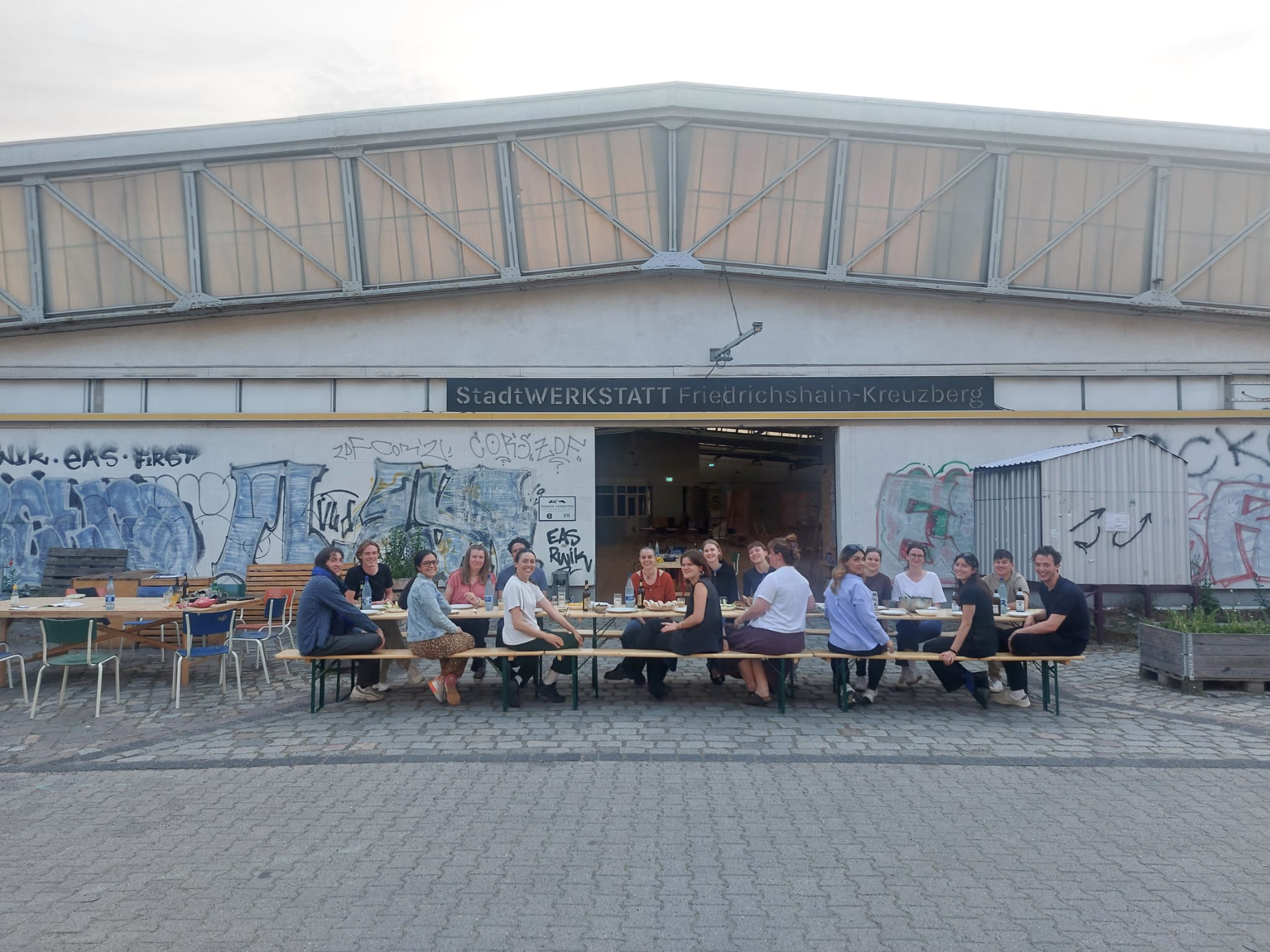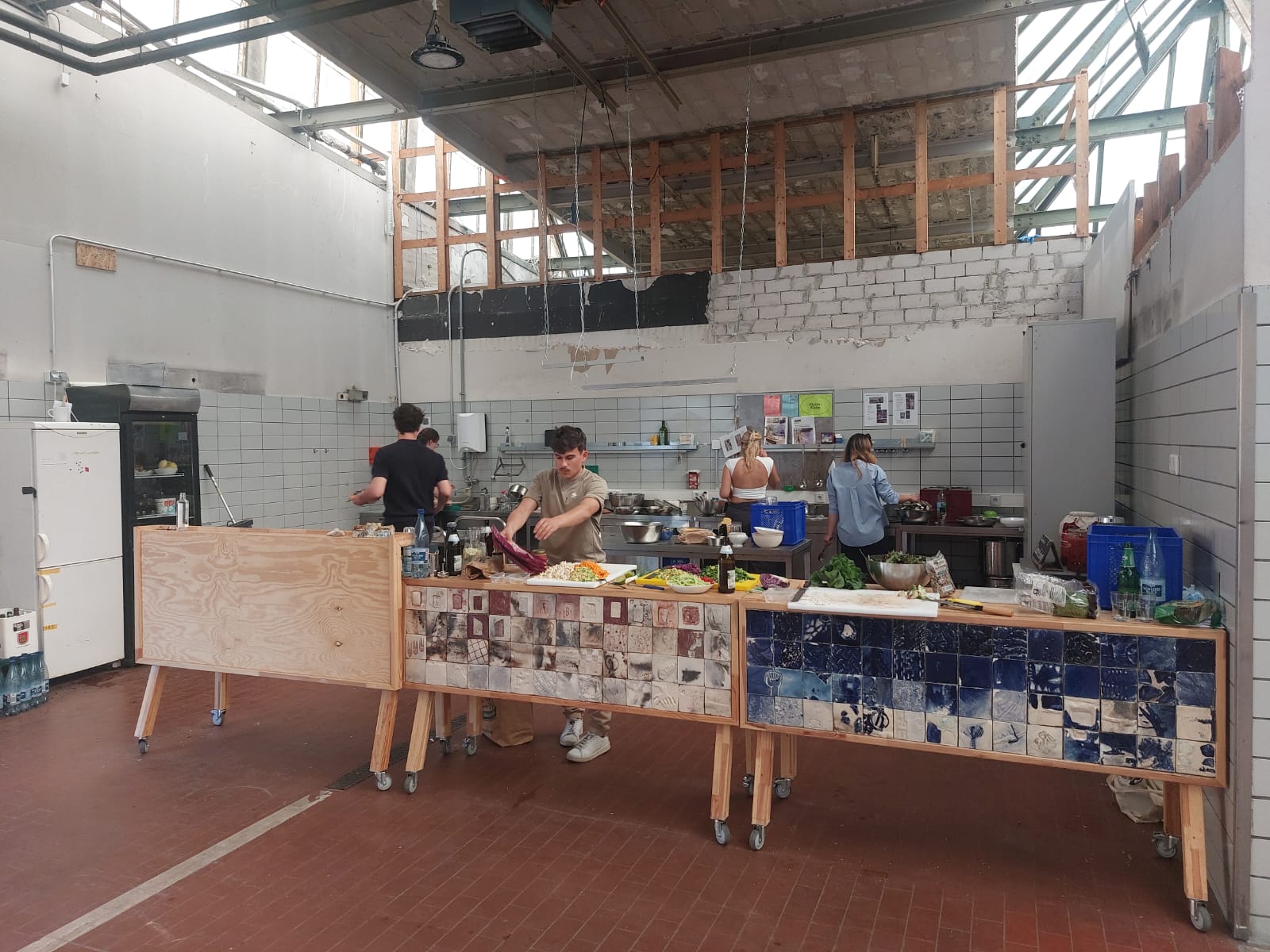
Emerging from more than a decade of struggle by urban activists, a cooperative model project has developed between the city administration and civil society. The project is currently in its development phase and highlights both the socio-political challenges and potentials of co-production. How can communication succeed between such different actors? How can we overcome diverse organizational and power structures to enable inclusive, balanced, and productive exchange?
In this workshop, we explored this case through hands-on exercises and socio-spatial site investigations. We reflected on how affordable spaces for living and working, as well as social and cultural places, can be created with the common good in mind – while thinking beyond the often resigned approach of “Realpolitik” in urban development. As an introduction to the case study, we also visited other exemplary projects in the Berlin context, projects that in our view exemplify how urban commons can be co-produced, co-mantained and co-inhabited in an inclusive, solidary manner. In doing so, we gained in-depth insights into the current state of urban co-production in a European capital city that is currently engaging with these socio-political questions in particularly intensive ways.
As part of the Fairville Project, the Berlin Lab is focusing on the Rathausblock under the topic of Planning and housing inequalities (spatial justice, urban renewal).
The lab is researching how the local spatial infrastructures along with specific community-driven programs (workshops, tools sharing and new communication strategies) have created common good- and spatial justice-oriented planning practices.
Veranstaltung: Urban Co-Production, The Case of Berlin.
Datum: 30.05.2025 - 01.06.2025
Ort: StadtWERKSTATT Friedrichshain-Kreuzberg